Sunday, July 29, 2018

The NPHS Reunion Interview: Sue Henry Martin, Class of 1968


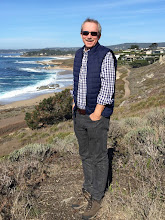
Sue with her "furry child" Macree in 2014 near Gettysburg, PA.
Describe your career.
I taught high school history and English in Fairfax County (Virginia) Public Schools, retiring in 2005. Teaching was an immensely rewarding and demanding career that in many ways allowed me to relive and truly appreciate how exceptionally fortunate I was to have been a part of NPHS.  

Where have you lived since graduating? 
I attended and graduated Mary Baldwin College in Staunton, Virginia. After college graduation in 1971, I lived at home in North Plainfield until 1973, when I took a job in Washington, DC, and lived in several different Maryland cities (Silver Spring, Bethesda, Chevy Chase) and Northern Virginia suburbs (Alexandria, Falls Church, McLean, Arlington). When my husband retired a few years ago, we moved to Pennsylvania and now live in Center Valley (southeast of Allentown).

Who were your friends back in high school?  Are you still in touch with them now? 
I had a few close friends through our high school years — Jeff Sperling (since 6th grade), Laraine Cox and Karen McCleary (since 7th grade), Rosanne DeTommaso, Nancy Reis. I am grateful to have either stayed in touch ever since or reconnected from time to time over the years — we just pick up where we left off last time we spoke or were together. Jeff and I met for lunch this month (July 2018)!  

Do you have any regrets about your experiences during your high school years?     
Very few, but, I learned a lot from those errors in judgment. My high school years were truly wonderful!

Now, 50 years later, has your perspective on your high school years changed at all?  If so, how? 
In high school I knew I had excellent teachers and that I was receiving an excellent preparation.  Now, 50 years later, and, having been a teacher myself, I truly appreciate not only my exceptional teachers, but the talented and good people who were my classmates.  After leaving our 30th reunion, I felt a renewed sense of belonging and pride in being a part of an extraordinary group of intelligent, accomplished, caring and down-to-earth people.  To whom much is given much is expected — I like to think that the Classes of 1968 and 1969 have lived up to that!

What is your fondest memory of your years at NPHS?  
How about a few of my fondest?  

Riding on the bus to away basketball games:  We cheerleaders rode in the front and the players in the back and there was a lot of school spirit and lots of encouragement on the way over and on the return either celebration or consolation and more encouragement.  The sense that we were all a part of something wonderful was palpable and inspiring. 

Great Book discussions:  They were high anxiety command performances but undoubtedly the highlight of my academic experiences — hard work can be fun! 

Singing the Alma Mater at graduation:  Fondest mem’ries round thee linger, cheer our hearts anew. The moment I turned to exit my row for the recessional and faced Rosanne DeTommaso, we both burst into tears of joy and sadness because we were graduating.  

What was the craziest or stupidest thing you did in high school?  
A group of us freshman girls decided it would be fun to sneak up behind upper class boys and rip the loops off the backs of their shirts while yelling “fruit loops”.  We would count to see who had the most, and, it was all meant to be a fun way to make our presence known.  We got their attention, and, most of them laughed it off as us just being silly, but I recall one senior boy making it clear he was not amused, and, he scared me enough to stop right then and there.  Years later I would chuckle and cringe about our audacity and complete oblivion to invading all those boys’ personal spaces.

What was your proudest accomplishment in high school?  
Being chosen to give a speech at graduation.  I still have the typed copy I delivered that evening and read it over from time to time. I must admit I am still proud of it and marvel over the fact that I just sat down and wrote it, pretty much straight from the heart and find the ideas still ring true.  I give credit to the culture of NPHS and my teachers, especially Miss O’Brien and her weekly essays and Great Books required reading, for instilling in me the values and guiding principles articulated in that speech that have served me well ever since. I think the four of us – Karen McCleary, Sue Turnbull, Harry Lewis and myself – felt especially privileged to be able to address our classmates in our own words.  In the days leading up to the ceremony, we met with Mrs. Bevins over in the band room at Harrison School to practice our speeches and get feedback. At that time, and, even today thinking back, it felt like a very special moment for all of us.  Essentially, my speech was about recognizing the incredible gifts our parents’ and earlier generations had bestowed upon us, the importance of upholding certain values, using our talents to make the world a better place in the face of the turbulent times being thrust upon us, and, our responsibility to future generations to ensure their inheritance of our share of abundance. With apologies for a lack of humility — those ideas are pretty impressive coming out of a 17-year-old, and, I give myself some credit for being intelligent enough to craft a compelling thesis. More credit must go to my parents and grandparents, but, much of the credit goes to my NPHS education and the extraordinarily talented teachers who imparted their wisdom, cared deeply about us as human beings, and equipped us with lifelong learning skills.

Who was your favorite teacher? 
I loved school and most of my teachers, so, I have more than one favorite — please indulge me:  Katie Gordon, English 11; Joe Pecoraro, Algebra II; Terry Haines Martin, Bio and Advanced Bio; Judith Ullman, Spanish I and II ; Rose Bellino, Chemistry; Nancy Schuman, Judy Grady and Grace Roff Hodge, P.E.; last but not least, the legendary Marie O’Brien!

What was your worst class? 
That would have to be U.S. History II — with apologies to Ed Stec — a great guy — but I could not stand memorizing names and dates!  I left NPHS swearing I would never take another history class and wound up majoring in history when I was introduced to primary sources and inquiry as method!

What is your most powerful or haunting memory during your years at NPHS?
Irene Hutnick’s death.  She was our cheerleading sponsor and, upon reflection at the time, in the weeks leading up to her death, she seemed unhappy. That she took her own life was inconceivably tragic and difficult for us to understand the pain she must have endured.

Living through the 1967 riots in Plainfield was the first time I can remember being fearful for my physical safety and struggling to understand my parents’ inability to reassure me.  That’s a powerfully haunting memory indeed.  Having been raised as what I would describe as “color-blind,” the presence of the National Guard with their armored tanks at the West End Avenue border with Plainfield introduced me to the disturbing concept of “us against them.”

How did growing up as a child of the 60s – and all the social baggage and impact that it may have entailed – impact you at the time and in your young adult years? 
As a young woman coming of age in 1968, I think I was typical in that I went to college expecting to become an educated wife, and, although I always liked the idea of becoming a teacher, I had no expectation that I would ever have a “career” as anything but a wife and mother.  Attending a small liberal arts college for women changed that slightly as “Women’s Lib” took off. However, most of my classmates and I thought that liberation was for women who didn’t want to be married and raise families. It must have frustrated our professors trying their best to create college-educated professional women, because most of us were only concerned with whether we were going to Charlottesville or Lexington or somewhere else to date the cutest boy at the best fraternity.  Sad, but, true!  "The Feminine Mystique" was required reading for all of us freshman year, but, I recall not taking it too seriously. By graduation, the seeds of my own feminism would take hold and remain firmly planted, thanks entirely to being at a women’s college!

As mentioned above, I felt I grew up color-blind and, as has been mentioned by others in this blog, non-discriminatory regarding race and religion.  I perceived North Plainfield as a community in which respect for others was a universal value.  As a White Protestant female, I knew very little of the sting of discrimination. 

My naivete, particularly towards race relations, was shattered when I arrived in Staunton — birthplace of Woodrow Wilson — and was an eyewitness to de facto segregation and its nuanced injustice. When I began teaching in Northern Virginia in the late 70’s, I was shocked to learn that Fairfax County Schools had only been fully integrated on the secondary level in 1965 — only three years before I attended college.

The anti-war movement was a passion for me, and, although Mary Baldwin College was a relatively quiet campus, many of us did what we could locally to support the effort.  I dragged a friend to a rally in downtown Staunton in May 1971, and, we wound up with our pictures in a story in the Staunton News Leader — much to my delight and her parents dismay.  I wrote my thesis on the history of the contemporary student protest movement and used the archives at Princeton and the University of Virginia for a lot of my source materials.  The History department chair wasn’t too impressed with my work, but my thesis mentor was proud and pleased. It was certainly not my finest piece of writing but I met my requirements, passed my oral defense, and said my piece — no pun intended.

The events and social movements of the sixties and seventies created a paradigm shift of unfathomable proportion that continues to evolve, and, my years at NPHS continue to guide me through this turbulent world of ours. I think that’s pretty remarkable!
Leonard Hall, American University, 1969.
Sue waits for Jeff Sperling's refrigerator to defrost.


Monday, July 23, 2018

The NPHS Reunion Interview: Jack Muldowney, Class of 1969

Jack Muldowney, 2017

Where did you attend college?
I attended Minnesota Tech in Crookston, MN, which was 90 miles from the Canadian border and just east of North Dakota. Population:  roughly 7,000.  I went there with Mike Maresca to play football.  Mike and I became captains of the
Jack (right) with teammate and
future NFL star Jim LeClair (24)
team along with another player. We had the opportunity to play with Jim LeClair who went on to play 12 seasons in the NFL with Cincinnati Bengals and appear in a Super Bowl. Tech was a junior college and after a year-and-a-half I transferred to Trenton State with the help of Frank Tramontano. I played two years there and graduated with a BS in Health and Physical Education. I never got a teaching job.  

So where did you work?
I was fortunate to get a job with Weldon Concrete, I worked for them for 35 years. For the past six years, I’ve worked at Phoenix Sand. I will be retiring at the end of the year

Where do you live now?  Where have you lived since graduating?
I’ve lived in Toms River for the past 25 years.  Before that, I bought the Migdal house in North Plainfield on Greenbrook Road right across from West End School.  Back in the 70s, I shared a house in Bernardsville with former NPHS classmates John Smith, Bob Doda and Bob’s brother Rich.  Lots of good stories there. 

Who were your friends back in high school?  Are you still in touch with them now?
I’ve stayed in close contact with Mike Maresca over the years. I really had a lot of friends in high school.  My closest friends then were probably Gary Garwacke and Al Misko, who passed away in 2015.  I’m glad I had the chance to see Al at his home in Coral Springs, FL, before he died.  
Jack with daughter Trish, Michael Maresca and Mr. Maresca.


Wednesday, July 18, 2018

The NPHS Reunion Interview: Beverly Gaston Kochard, Class of 1969


Beverly in the office at Allentown College in 1975
where she worked as the first director of the school's college union.

Describe your career.

With the ink still drying on my BA in English, I was hired by Allentown College (now DeSales University) as the first director of their college union.  I served in that capacity for seven years and completed graduate work at Lehigh University, after which I moved on to a sequence of administrative positions elsewhere.   The last 22 years of my 39-year career in higher education were spent as Vice President for Student Affairs at Moravian, and I retired as VP Emerita in 2012.   It was truly an exhilarating ride. 

Where do you live now?  Where have you lived since graduating?
For years, my mother told people that I “went to Pennsylvania to go to college and never came home.”  That’s not really true, and yet maybe it is in that I fell in love with the culture of eastern Pennsylvania and all it has to offer.  My husband, Dale, and I met when we were seniors at Lehigh and Moravian, respectively.  We married in 1974 and have lived in Pennsylvania our entire married life.  Sharing a passion for history, heritage, and antiques, we bought a 200-year-old stone farmhouse in Upper Macungie (near Allentown) in 1990 and have been restoring it ever since.  I doubt we’ll ever be done.

What was your sense of community in your class/in the school at NPHS?
Our class, like most classes, was comprised of groups, but I seem to remember them as being somewhat amorphous in nature, with people moving in and out in accordance with changing interests, activities, goals, and priorities.   As young people do, we passed judgment too quickly at times and missed the chance to develop relationships with others who had so much to offer…and so much to teach us along the way.

Hopefully, we’ve all grown more appreciative of the differences that once separated us.  I’d like to think that, as we approach our 50th well aware that some classmates are no longer with us, we now see ourselves as one group…one very special club comprised of those who went on a journey together and came out on the other side.

What experiences in high school, positive or negative, helped to shape you as a person?
It was more the composite picture that shaped me as a person…the sum of experiences that I had at NPHS.  Looking back, those years strike me as a time of collecting developmental puzzle pieces that ultimately fell into place over the years. 

Do you have any regrets about your experiences in your high school years?
I think perhaps I stayed too much within my comfort zone… really didn’t take advantage of a time that’s so full of opportunities for personal discovery and growth.

Now, 50 years later, has your perspective on your high school years changed at all?  If so, how?
I’m not sure my perspective has changed, but the specifics have certainly faded.  It’s hard to call it all back into focus 50 years later.

What is your fondest memory of your years at NPHS?
For me, it’s a collective remembrance of the relationships and of the particular people who were such an important part of my life at that time.  I had a lot of friends but probably spent the most time with Christina Soler, with whom I still maintain contact, and Tracy Sylvester, who passed away in 1998.

What was the craziest or stupidest thing you did in high school?
Now, see…this is where it’s helpful to have diminished recall – or selective recall! – in terms of 50-year-old memories.  Let’s just say that I definitely ate way too many onion rings at Opdyke’s on Rt. 22.

What was your proudest accomplishment in high school?
It was being honored by the American Association of University Women and presented with a scholarship during the awards ceremony at the end of our senior year.  I remember filing into the gym and catching a glimpse of my parents off to the side.  That told me something was up, but I had no idea what until my name was called.

Who was your favorite teacher?
Miss O’Brien and Mr. McKenna top the list.   Marie O’Brien’s English classes convinced me that effective writing skills provide a strong foundation for just about any career path, including the one that I ultimately traveled in higher education.  And Dick McKenna’s biology classes ignited a personal interest in genetics that morphed into an all-too-time-consuming pastime of researching my ancestry.

What was your worst class?
That’s an easy one:  chemistry.  I struggled with it in high school and again in college.  PE probably comes in at second place.   In high school, it seemed like I was not good at anything vaguely athletic, which is why I tended to cringe in gym class when Nancy Schuman would yell “Ladybugs!  Hustle your bustles!”  But then Jane Fonda came along, and I learned about exercise one can do in the basement.  Years later, totally hooked on aerobics and Pilates, I find myself thinking how amazed Nancy Schuman would be at this transformation.

What is your most powerful or haunting memory during your years at NPHS?
I recall the moment we learned of JFK’s assassination, of course, and the sadness when a classmate’s brother lost his life in Vietnam, but for me the most haunting memory is probably Bob Gardner’s death in a car accident during our senior year.  We thought we were immortal.  That was a tragic wake-up call for us all.

How did growing up as a child of the 60’s – and all the social baggage and impact that it may have entailed – impact you at the time and in your young adult years?
In retrospect, I was somewhat embarrassingly oblivious to what was going on in the world in terms of social change, political upheaval, and civil rights until I got to college.  Then the blinders came off.  It was impossible to be on a college campus in the early 70s and not sense the societal seismic shift going on all around us. 

My most vivid memories have to do with the Vietnam war.  One is of huddling with classmates in the college union lounge with eyes glued to the TV as numbers were drawn in the draft lottery to see who would and who would not be called to serve; I can still feel the anguish so palpable in that room.  A second is of struggling to decide whether to abandon my spring semester classes and go on strike with many of my classmates out of principle or continue to go to the classes for which my parents had paid a sizable sum.  And a third is of agonizing over the state of our society when Kent State happened. 

During the 1970s, University of Colorado professor Morris Massey produced an insightful video called “What You Are Is Where You Were When.”  The premise, in part anyway, is that members of a generation are shaped by particular defining moments in history that occurred during their growing-up years… most notably during their teenage years.

Just as our parents were majorly impacted by World War II, we bear the imprint of all that occurred during the late 6os and early 70s.  I think growing up when we did pushed us to be more questioning and contemplative.  It challenged us to be more self-aware.  And, hopefully, it made us more compassionate. 
Beverly Gaston Kochard in 2018 at Kiawah Island, SC.


Friday, July 13, 2018

The NPHS Reunion Interview: Karl Krawitz, Class of 1968

Karl Kawitz on the job in 2013 in his role as principal at Shawnee Mission East High School, Kansas.
Please describe your career
When I graduated from NPHS, I attended Baker University (Kansas), where I earned a bachelor’s degree in chemistry.   I taught the same subject at the secondary school level for nine years.  While teaching, I went back to graduate school and earned a Master’s and Doctoral degree in Educational Administration with an emphasis on school architecture from the University of Kansas in 1987.  For 30 years, I was a building principal for four different high schools in two major school districts in eastern Kansas.  In addition, I served as a consultant for both school districts assisting in the planning and construction of more than 1.5 billion dollars in new building construction.   In 2004 I was selected as Kansas PTA Educator of the Year and in 2008 I was inducted in the Baker University Hall of Fame (Education), for my career work in the profession.  I retired the first time in 2005 and became an associate professor in educational administration at Baker University where I stayed until 2008. I returned to the same school district I retired from in 2005 and stayed until I retired a second time in 2013.

Where do you live now?  
Along with my wife Patricia, I live in Overland Park, KS, a suburb of Kansas City.  Basically, since graduating from NPHS, I have lived in the Kansas City area. We have two sons, and five grandchildren.

What was your sense of community in your class/in the school at NPHS?
I always thought we had a strong united class and a great school.  Since I lived at the extreme southern/western border of the school district (between North Plainfield and Greenbrook), it was often difficult to interact with other classmates, so at times I really did not feel like I was part of any one group of friends.  For me that completely changed once I was able to “drive” my senior year.  Who can ever forget the Saturday night canteens, dances, and athletic events? 

What experience in high school, positive or negative, helped to shape you as a person?

The one event for me was both positive and negative; however without question, it was profound.  Throughout high school, I was never a serious student.  I enjoyed everything else about school, except going to class.  Early on in my senior year, I was called to the counselor’s office.  The counselor began by asking me what I was planning to do after high school.  I said to attend college (though I had done absolutely nothing to acquire information or apply to any school).  She told me my test scores, class rank, and GPA were not at an
Karl Krawitz, principal of
Olathe East High School,
Kansas (1992)
acceptable level for college admission.  She went on to say, I should consider other alternatives.  To say the least, the meeting made me mad, even though I knew what she was saying was true.  Even though, my grades improved during the second semester it was too little too late to make a huge difference.  With few college and university offerings, I entered Baker University as a probationary student in the fall of 1968.

Do you have any regrets about the experiences during your high school years?
My only regret (besides maybe being a better student) would have been to be a better athlete.  I really enjoyed sports (still do); however I had little talent.  I really enjoyed practices, especially basketball.  

Now, 50 years later, has your perspective on your high school years changed at all? If so, how?
It is somewhat Ironic that I spent 42 years in education based on my overall experience in high school.  Schools (at all levels) place too much emphasis on standardized testing, GPA, grades and class rank.  Many of you would be surprised to know, both test scores and grades are really poor predictors of future success (however measured).  There will be many of you who will not believe research is equally divided on the subject.  This is why schools should never give up on any child.  In fact, schools should be a place where children find hope for their future regardless whether they go to college or not.

What is your fondest memory of your years at NPHS?
My fondest memory was having the opportunity to be a member of the varsity football and basketball team my senior year. Even though I hardly ever played in a game, practice was fun, especially basketball.

What was the craziest or stupidest thing you did in high school?
Writing a forged note excusing my absence from school because of illness.  Got away with it
Breaking in: Karl Krawitz in 1972
at Olathe High School, his
first year as a teacher.
three times.  On the fourth attempt, Mr. Stec just happened to be the teacher handling excused notes that day in the nurse’s office.  Without me knowing, he had seen me the previous day in the afternoon playing pinball at Great Eastern (Anyone remember this store on Highway 22?).  Needless to say, I was caught.

What was your proudest accomplishment in high school?
At the time it was graduation.  Looking back, it was a change in attitude late in my senior year and listening to the advice given to me by so many of you and by some very special teachers/coaches like Howard Porter.


Saturday, June 23, 2018

Monday, June 18, 2018

The NPHS Reunion Essay, By Gabriele (Gaby) Steiner Gertsch, Class of 1968

After high school I decided to go to a private Liberal Arts College in Pennsylvania (Elizabethtown), which had a good reputation. Soon after school started, I began feeling very lonely there. We were out in the country near Lancaster in the middle of Amish country. That is when relatives in Switzerland offered that I could come stay with them at any time. My brother Beat from the class of 1969 had stayed the summer with them and invited me to Switzerland.  So, I started working on Plan B.

In the summer of 1969 I went to the beach town of Wildwood, NJ. Every day I would clean rooms until about 2 PM. Then at 5 PM I would work at a restaurant. I did that seven days a week. I saved enough money to travel via Iceland to Luxembourg and I still had $400 left over, which at the time was worth 1,600 Swiss Francs. Sallie Gillen McDonald, class of 1971, traveled with me for the first three weeks. We stayed with relatives in a beautiful mansion in St. Gallen.

I worked at the restaurant Rössli in Zofingen, where I was also able to live with the owners.  It was again a lonely time for me until a friend from high school, Joanna Pandolfino from the class of 1969, came to visit. I went to see her again at her relatives in Madrid, Spain. We travelled all over Spain by train. Because she was fluent in Spanish we did not have any problems getting around. We had a wonderful time. Unfortunately, Joanna died at only 23 years old in a horseback riding accident, so I never saw her again.

Half a year later I started a farming school in Morges ("Bäuerinnenschule"). Each weekend I was allowed to go stay with someone and that is how I learned about the life of a farmer. I would never want to become a farmer! During that time, I would also go to "L'Abri," a well know American community of Christians in a small village above Aigle. Hundreds of Americans would go there because of Dr. Francis Schaeffer. I went there for a weekend and could sense the presence of God. 

In 1971, I returned to the U.S. with two friends. One of them, Felix Gertsch, would become my husband. We stayed with my brother Beat in Charlottesville, VA. Through another student, Beat had met Jesus and encouraged me to seek Him also. The Christian student group organized a weekend and that's where I met Jesus, which changed my life. I then asked Jesus, "What now?" I had the strong impression that I should return to Switzerland.

Back in Switzerland, I studied at a secretarial school and worked for many years at ESSO where my superior was very kind to me and paid me well. During this time, Felix was working in South Africa and subsequently travelled around the world. In June of 1974, Felix returned to Switzerland. Felix and I got married on September 10, 1977, and over the years we have been hosting many visitors from abroad. There were so many that I could not even count them all.

On May 20, 1979, Andreas Joel was born and 21 months later, Stefan Daniel. On September 30, 1984, I had a stillborn baby. Andi wanted to name the baby Mirjam, if it was a girl (which it was). We had just gone through the story of Moses as a baby and how Mirjam brought him back to his mother to take care of him until he was weened. I immediately had a "Yes" to Andi's wish. Because God is so merciful, He blessed us with a third child, Liliane Estella, on September 25, 1985. Everybody was happy. With three children, church involvement and visitors, I had a full schedule. 

We would travel about every three years to the U.S. to visit my parents and the family of my brother Beat. We often traveled with Beat’s family the beach or to various national parks by camper. I also visited regularly with Sallie and with Carol Martinez Weber, from the class of 1968, who I met on the first day of third grade and have stayed close friends with ever since.

Because my mother died of breast cancer at a young age I always was aware that this would also be a health risk for me. In 1997 I found a lump in my breast and that is how my story with cancer began.

After doing a total body scan the doctors also discovered something in the left kidney and I had to undergo a surgery for that as well. The surgeon was very pleased that the cancer had only grown in the kidney and not attached to the surrounding area. I continued regular checkups for 10 years until the physician said that I no longer needed to come in for checkups (for the kidney cancer). After that I had breast cancer two more times with chemotherapy and radiation.

Eighteen years after the kidney removal surgery I started having pain in my back and I also started having a weird cough. We had already planned our trip to the U.S. to meet our sixth grandchild. A few days after returning to Switzerland I went to see my oncologist. At the doctor's appointment I no longer was in pain and I also was not coughing anymore, but I had too little blood. Then it all started. A PET-CT showed that cancer had metastasized to my left hip bone, the adrenal gland and the lungs. A
bronchoscopy and a hip bone biopsy indicated that it was renal cell cancer. My oncologist could not believe that after 18 years the kidney cancer had come back and metastasized. 

From the very beginning, God has given me the promises of Isaiah 41:10 ("Do not fear, for I am with you; do not anxiously look about you, for I am your God. I will strengthen you, surely I will help you, surely I will uphold you with My righteous right hand.") and I was able to experience this in the last few years. Sometimes I could hardly believe that I was treated like a VIP and I was taken seriously. It has really helped me that it was, actually, God who took care of me.

I am thankful to you, my relatives, friends and brothers and sisters in the Lord. I am thankful for your lives and the time we were able to spend together. I have to say that I have had an exciting, fulfilled and joyful life. Most of all I am thankful to Felix, for everything that he has done for me, especially in this last season of my life. God will repay him accordingly. Also, for our children, their spouses, and our six cute and lovely grandchildren I am very thankful. They have given me so much joy. I know that they have wonderful parents who will prepare them from the beginning for a life with Jesus. That is the very best you can give a child.

Gaby died, in July 2017, shortly after writing this story of her life (abridged here).
Gaby at her last birthday party, with her husband Felix.

Monday, May 21, 2018

Do You Know How to Contact These Classmates?

We have contact information for a majority of classmates from the class of 1969.  However, we are unable to contact the following classmates:
Mark A. Bartosh
Diane M. Bennett Dietz 

Dennis Bohn
Brian J. Casey
Eileen F. Dwyer Pelizzoni 

Gail Eskenazi Strocker 
Patricia A. Higgins Grizaniuk 
Patricia L. Johnstonbaugh Whisman 
Lorraine W. LaManec
Eileen M. Mahon Crawfort 

Anita L. Meeks Cair 
Constance A. Myers
Emile R. Pratt
Donna R. Radkovich
Robert M. Salerno
Joan C. Setterberg 

Kathleen A. Shovlin Grosch 
Laurie S. Smith
Richard J. Smith
Robert I. Tarnoski
Dinos Tony
Pamela L. Young


If you have any information about them, please contact:
Janicehansenlake@gmail.com

Saturday, May 19, 2018

NPHS Reunion Interview: Beat Steiner, Class of 1969


Beat Steiner hiking in Denali National Park, Alaska, September 2014.
In 100 words or less, describe your career.  
From NPHS, I went to the University of Virginia (UVA) where I majored in religious studies. I went on to Regent College at the University of British Columbia for graduate work in Christian studies. I spent three years in Christian ministry to students, but ended up as a lawyer, as I had considered doing since my freshman year in high school. I wanted a profession that was respected. Oh well. I graduated from UVA Law School in 1980, spent three years on Wall Street and then moved to Boulder, CO (my wife’s home town). I have practiced real estate law in Denver and Boulder for nearly 38 years - most of it related to ski and other resorts. I am slowing my practice down and gravitating back to ministry.

Where have you lived since graduating?
 In sequence: Charlottesville, VA; Vancouver, British Columbia, Canada; Charlottesville, VA; New York City; and Boulder, CO. 

What was your sense of community in your class/in the school at NPHS? 
Throughout my time in high school, I worked 20 hours per week at Opdyke’s and, really, that was my community. My sister, Gaby, worked there, and, if memory still serves me, the regular crew included Judy Stanislao and her sister and mother and now husband, John Mehltretter, along with Eileen Thompson, Anita Smith, Bruce Jones and John Benassu. Such a great group to work with and some fun memories too. Mr. Opdyke taught me a great deal and opened doors for me. I owe him a lot.

 What experiences in high school, positive or negative, helped to shape you as a person? 
The positives were many: I got a good education and was ready for the challenges of university when I graduated. I had many leadership opportunities, serving as class president; lt. governor, state secretary, and governor of New Jersey Key Clubs; and delegate to the Model United Nations.  I learned a great deal about leading and following (and getting out of the way), all of which have enhanced my professional and personal life.I also learned a lot about life and love and joy from the many really nice people in our class.

Do you have any regrets about your experiences during your high school years? 
I look back at the time in high school as often being lonely, and I felt somewhat out of step – perhaps because my family situation was not great, and, in a subtle way, as an immigrant who lost my first language and connection with the land of my childhood, I was neither truly American, nor truly Swiss. I also felt quite defeated about sports in high school – in the first instance because I thought of myself as skinny, weak, and uncoordinated. I learned as an adult that I was much better at athletics than I had any idea. It proved to be a life lesson about limiting myself, which I certainly did in this respect. 

Now, 50 years later, has your perspective on your high school years changed at all?  
I recall being grateful when I graduated from NPHS, and I am still grateful now. I see now that many things I may have missed out on in high school were the result of limitations in my head, not in reality. At the same time, I accomplished a lot, and NPHS set me on a course that allowed me to succeed in many ways.

What is your fondest memory of your years at NPHS?
One moment sticks out in my mind: One sunny afternoon in my senior year I had been excused to go speak at a Key Club event. My 1965 Chevy Impala convertible (that I bought with my own money – thanks to working at Opdyke’s) was parked out in front of the school. I felt so free – so cool - as I lowered the top on my car and drove off.

 What was the craziest or stupidest thing you did in high school?
Also in my senior year, I was doing a photo essay on Langston Hughes. To get real life photos depicting the subject matter of some of his poetry, I drove through Harlem taking pictures. One scene I captured was of three men on a street corner passing around a bottle of liquor. I got the shot and as I drove on that bottle came through the rear window of my car and shattered it. I think I ran every light between 112thand 42ndStreets. Clearly stupid (and, now I realize, insensitive and racist). I still have a couple of the pictures from that project.

What was your proudest accomplishment in high school?  
Being elected Governor of the New Jersey Clubs would have to be it. It allowed me to travel extensively and be inspired by volunteer community service being done by students all over the state.

Who was your favorite teacher? 
Miss O’Brien comes immediately to mind because, without her rigor, I would never have become the writer I am today. But I have to include Mr. Justus, because he was ridiculously funny and taught me German (my first link back to Switzerland).

What was your worst class? 
Calculus. My father was a chemist and a math whiz. His genes skipped right over me. I sometimes joke that I became a lawyer so I could use words not numbers. Typing comes in second. Little did I know, however, how useful that class would be, as I now spend most of most days typing (on a keyboard, mind you). 

What is your most powerful or haunting memory during your years at NPHS?
Robby Gardner’s death. Although he lived around the corner from me, I did not know Robby well. But I did see his sister, mother, and father regularly after the accident, and the sadness never left them. How could it?

How did growing up at a child of the 60s – and all the social baggage and impact that it may have entailed – impact you at the time and in your young adult years?
True confession here: I was quite conservative politically throughout high school and on into college. I truly thought that most of what was going on in the 60’s and early 70’s was reflective of the moral degradation of our society. I still think a lot of what happened in the 60’s was the moral degradation of society, but the music was awesome, the stripping out of hypocrisy and hypocritical institutions was welcome, the opening of people’s minds and hearts to matters deeper than the material world was enlivening, the civil rights movement was just and necessary, and the anti-war protests were spot on. As to the war protests, I have great remorse. How naive I was about our government. 
Beat (left), his sister Gaby (class of 1968) and his best friend Dale Simmons (class of 1966),
in front of the North Plainfield Baptist Church in 1974.  

Thursday, May 3, 2018

NPHS Reunion Interview: Noel Marks, Class of 1969


Noel Marks, June 2017, Honfleur, France (in the Normandy region)
Tell us about your career
I was Senior Investigator, U.S. Department of Labor, Wage Hour Division from 1974 until my retirement in January 2015.  I independently conducted investigations of covered employers to determine compliance with various Federal Labor Laws including the Fair Labor Standards Acts, Federal Minimum Wage Law, Child Labor Stands, Family Medical Leave Act, Davis Bacon and Related Acts, Service Contract Act and others.  One of my investigations, McCaughlin vs. Richland Shoe, was decided by the Supreme Court in 1988.  

Additionally, since 1976, I have been President of my own company, Lancaster County Antique Art.  I buy, sell and appraise American and European paintings, sculpture, watercolors, rare coins, stamps, period furniture, antiques and collectibles.

Where have you lived since graduating?
Ocean Grove, NJ, 1971-1974; Union, NJ, 1974-1976; Middletown, PA, 1976-1978 (within a mile of Three Mile Island); Lebanon, PA, 1978-present (actually Cornwall, PA, but the mailing address is Lebanon, PA).

What was your sense of community at NPHS?
Since I grew up in the West End, I had a wide circle of friends from my younger days which carried on into Junior High and then High School.  Looking back, I now realize what a diverse group of friends from various ethnic backgrounds they were including Italian, Polish, Spanish, German, Middle Eastern, South American, Puerto Rican, as well as multiple religious beliefs (Catholics, Protestants and Jewish).  I considered everyone a friend and enjoyed the diversity.  My best friend, Al Muglia, lived right up the street from me and his mom and dad treated me as a son.  As a kid, I was a little slender and his mom always welcomed me with “Mangia, mangia, come eat, eat” when I was hanging out with Al.  His dad took us hunting and fishing, and included me in numerous extended family gatherings.  To this day, I rave about what a wonderful Italian cook Mrs. Muglia was and the generosity of their family. I have very fond memories of my younger days in North Plainfield.

What experiences in high school, positive or negative, helped to shape you as a person?
All of my teachers instilled in me a sense of purpose and provided sound guidance for me to get an education which has made a profound difference in my life.  I am eternally grateful for their dedication, sacrifice and efforts.  HOWEVER, the Administration, led by Edward J. Gibbs III, and specifically, Vice Principal John Messer, provided a dark, negative undertone with their heavy-handed, capricious, demeaning and unnecessary disciplinary actions.  Just where is my “Official Permanent Record” and what heinous misdeeds are listed there?  Walking in the hall without a pass?  Taking a drink at a fountain?  Standing inside the door of the school on a frigid day?  I must confess, though, I did toss more than a few spitballs back in the day!

Do you have any regrets about your experiences during your high school years?
My only regret is that I did not thank my teachers for their efforts during my high school career.  It is now too late as most of them have passed.  And I should have also spoken up more forcefully when I witnessed my friends being chastised for the length of their hair, clothes they wore, music they listened to, and expressing their personal opinions.

Now, 50 years later, has your perspective on your high school years changed at all?
Not much, really.  It was a fun time in an era without cell phones, text messages, social media, etc.  Heck we didn’t even have calculators and computers!!!  And it is completely absurd to realize many of my friends in high school were subject to discipline due to their hair, clothes, and opinions.

What is your fondest memory of your years at NPHS?
I will always remember the wonderful cars my friends and others drove up and down Wilson Ave.  Among those that I distinctly recall are:  John Guerro’s green Dodge Charger, Rich Pellizoni’s Ford Thunderbird, Karen Von Tish’s Ford Mustang, Frank Vastano’s Canary Yellow Chevy Impala, my buddy Al Muglia’s 1965 Blue Ford Custom, (former NJ State Cop car); my sister, Jill, drove our 1968 Red Opal Kadett “Mini-Brute,” and my rust bucket 1958 Ford Station Wagon.  My friend Willie Orloff’s parents let him drive their Mercury Breezeway with the power sliding rear window that was really fun to ride around in!  We always had a blast just cruising around town and maybe once in a while we might have driven over to Staten Island to drink some beer!  Now I’m not saying I was ever in Tarry’s Tavern, which was at the base of the Outer Bridge in Staten Island, but I might have been a few times.  I still have my “Tarry’s Tavern” T-shirt around here somewhere!

What was the craziest or stupidest thing you did in high school?
How many pages do you want me to compose?  I did many crazy and/or stupid things in high school; we all did, I think.  One particular stunt that stands out was when I was given a ticket for riding on a sled in Plainfield one Christmas eve.  It had snowed and the streets were covered in ice.  After church on Christmas eve, I changed clothes and went over to Dave Giesa’s house, which was on Manning Ave. in the East End.  His Mom always thought we were saints (LOL), and she gave us hot chocolate and homemade cookies to celebrate.  Since t had snowed, we decided to go out to Plainfield Country Club to sleigh ride.  The hill out there was fabulous for sledding.  The roads were snow covered and very icy, perfect for riding sitting up on a Flexible Flyer behind a car holding onto a rope.  You slipped the rope around the chrome bumper, let out about 50 feet or so, and once you got going, it was a hoot!  Going around corners was unreal!  Dave was flying around the streets in the Sleepy Hollow section of Plainfield, near Muhlenberg Hospital, when all of a sudden, a police car spotted us.  I had told him previously that if that happened, to floor it and I would drop the rope.  Obviously, the cop shined his light on me, while Dave took off.  The cop confiscated my sled, gave me a lecture on how dangerous it was to ride behind a car on a sled, and took me to the station.  The result was a hefty ticket for “Unauthorized Hanging onto a Vehicle.”  Dave got away and I did not rat him out.  The story I concocted was that I had been sledding out at the Plainfield Country Club and asked a guy who was leaving if I could hitch a ride home behind his car.  A real bunch of bullsh*t, but I think they knew I was not going to give any more information.  This incident was published in the “Plainfield Police Reports” in the Courier News the following week.  I think that stunt qualifies as both “Stupid” and “Crazy.”  My sister, Jill, has loads of stories of my notorious exploits.

What was your proudest accomplishment in high school?
I was elected to the National Honor Society and served as my Homeroom Representative on the Student Council.

Who was your favorite teacher?
I had multiple favorite teachers.  Mrs. Ethel Abrams, my English teacher, challenged me to think, and defend my opinions.  Ms. Rose Bellino opened my eyes to the wonders of Chemistry.  Coach “Bud” Porter consistently demonstrated true sportsmanship and taught me to treat all people with fairness and respect.  Mr. Nelson Ernest, Band Director, who was a man with immense patience, went out of his way to allow me to play the School’s tuba.  Ms. Elizabeth Hoelter and Mr. Stephen Kovach encouraged my love of mathematics.  Mr. Russell Heeren ignited a love of woodworking that guided many construction projects during my years rehabbing and restoring houses as a landlord.  His vast knowledge still amazes me.  And Mrs. Lillian Tallent taught me how to type, which is a skill I am demonstrating as I write these lines.

What was your worst class?
Without a doubt it was French 1, taught by Mr. Gould.  I should have worked harder at the time because I really love France, French culture and its people.  My wife and I have visited France quite a few times, and when we are wandering around Paris I am at a loss when I encounter someone who speaks no English.  “J’ai besoin de plus de pratique pour parler francais.”

What is your most powerful or haunting memory during your years at NPHS?
I have two days that I remember very distinctly.  The day we were informed John F. Kennedy was killed, I was in 7th grade English, Miss Riccoli’s class, upstairs in the Old Building.  That was a very sad afternoon.  And the evening Rev. Dr. Martin Luther King, Jr. was assassinated, Thursday, April 4, 1968.  These days are etched in my memory as very dark days for America.


And another extremely sad day was when I learned Bob Gardner, who was a friend of mine and had a wonderful sense of humor, was tragically killed in a car accident that injured three other of our classmates. That accident, which occurred very near my house at the corner of Lawrence Ave and Green Brook Road, cast a pall over our class. The promise of an extremely bright future was snuffed out in an instant. Every time I go past the spot where that accident occurred I feel remorse. Those who knew Bob, and he was well liked by everyone who had the pleasure to be friends with him, were deeply affected.

How did growing up as a child of the 60’s-and all the social baggage and impact that it may have entailed-impact you at the time and in your young adult years?
As a member of the “Baby Boom” generation, I never really thought much about “social baggage,” as I was able to graduate from the University of Maryland, College Park during the peak years of the Vietnam protest movement.  I participated in numerous demonstrations and peaceful protests at Maryland and in Washington, DC.  What I learned from these activities was that we, as individuals, had rights and responsibilities which would impact social norms.  I believe we could, and we would work for a better future.  And I think the accomplishments of most of our classmates have manifested this change whether it be in business, law, medicine, and with our families.  Members of our generation have made a difference and continue to make an impact.

As an aside, I offer a hearty “Thank You” to you, Howard, for taking the time and sharing your talents with members of the NPHS class of 1969.  Not many other people are willing to devote their precious time and resources to this sort of project.  You can put this “Thank You” in your “Permanent Official Record,” (as Vice Principal John Messer would say), that is if you can find it!
 
Noel's 1972 University of Maryland cafeteria ID card.